Most construction and industrial companies approach video the same way they'd approach buying a piece of equipment they only plan to use once.
They budget for it, they get the thing, and then they move on.
The firms getting the most value from video think about it completely differently. They treat a production day the way a good operator treats a well-run job. Plan it thoroughly, execute efficiently, and extract everything it has to offer before you pack up and leave.
The difference in what those two approaches produce is significant. And it shows up in the work.
What Three Shoots Taught Me About Getting More From One Production Day
Over the past several months we produced video for three very different companies: Kent Design Build, a design-build construction firm with active job sites in Hammond and Kaplan; Michelli Weighing and Measurement, a measurement and calibration company operating out of a facility that included calibration labs, a warehouse floor, and active equipment bays; and Bascom Hunter, a professional services firm that was in the middle of moving into a new building when we showed up, studs in the background, construction actively happening around us.
Three different industries. Three different environments. Three completely different production challenges.
What they had in common was that each shoot produced significantly more usable content than a single finished video.
Kent Design Build: Active Job Sites and an Efficient Crew
The Kent shoot ran across their office and two active job sites in Hammond and Kaplan. Shooting outdoors in Louisiana means managing light that changes by the hour, working around equipment that doesn't stop moving because a camera crew showed up, and adapting your shot list on the fly when you arrive at a job site and find conditions you couldn't have fully anticipated from a planning call.
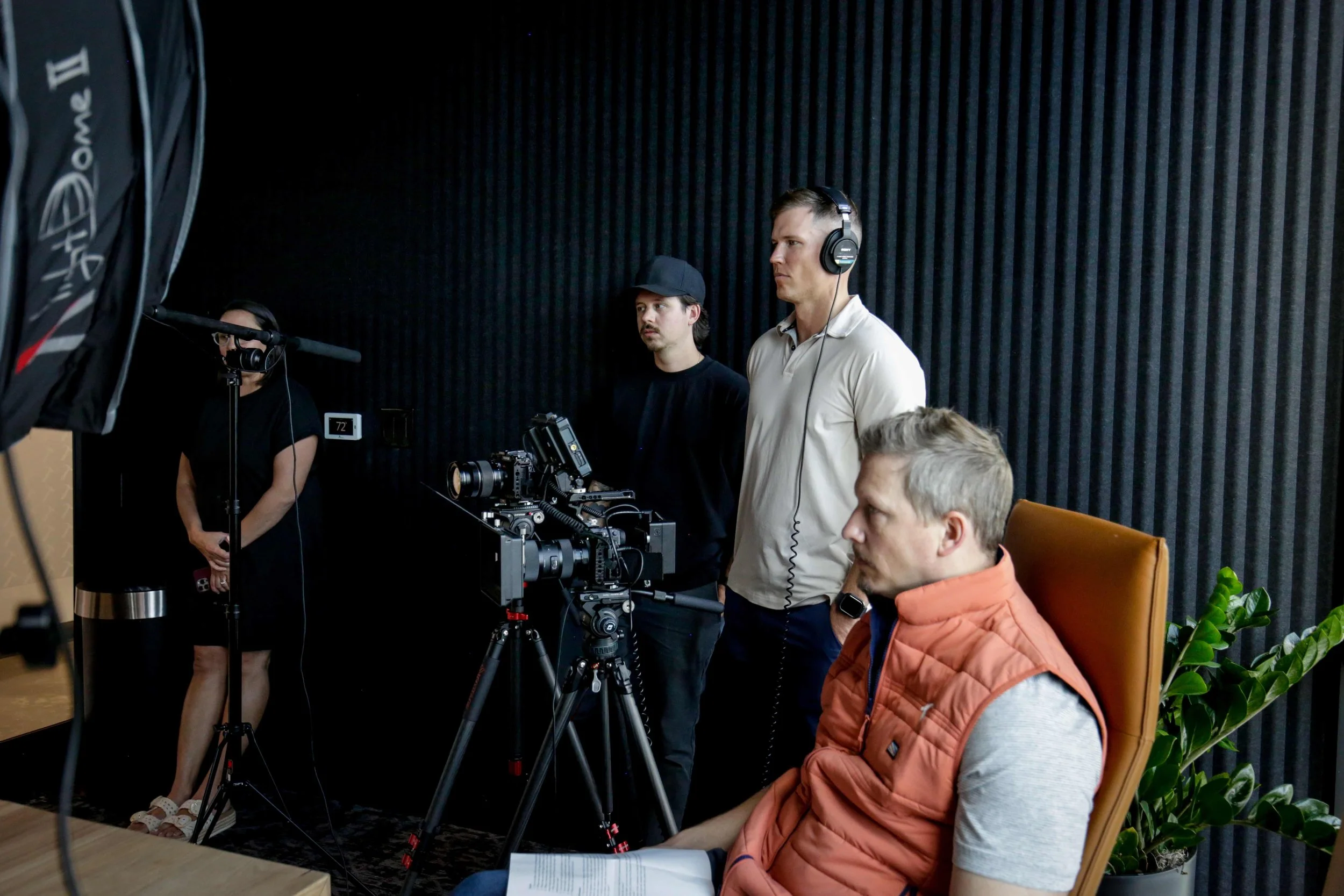
We brought a full crew because efficiency on a shoot like this isn't optional. You have leadership interviews to capture at the office, b-roll to shoot across active job sites, drone coverage to plan around wind and FAA requirements, and a schedule that doesn't accommodate a slow setup.
Brennan from the Kent team was one of those interview subjects who starts a little slow and then finds his footing. By the end of his interview he was delivering material that was genuinely strong , specific, confident, the kind of thing you can't script and can only get by creating the right conditions and giving someone enough time on camera to get comfortable.
From that single shoot we captured: a 60-second cinematic brand film, a 2-5 minute company overview, branded intro and outro bumpers for every future video they produce, and a b-roll library of active job site footage that will be available for future edits for years.
One crew. Two days. Assets that will still be working five years from now.
Michelli Weighing and Measurement: Adapting to a Dark Warehouse
The Michelli facility included calibration labs, a warehouse floor, and equipment bays and like a lot of industrial facilities that have been operating for decades, parts of it were not designed with camera crews in mind.
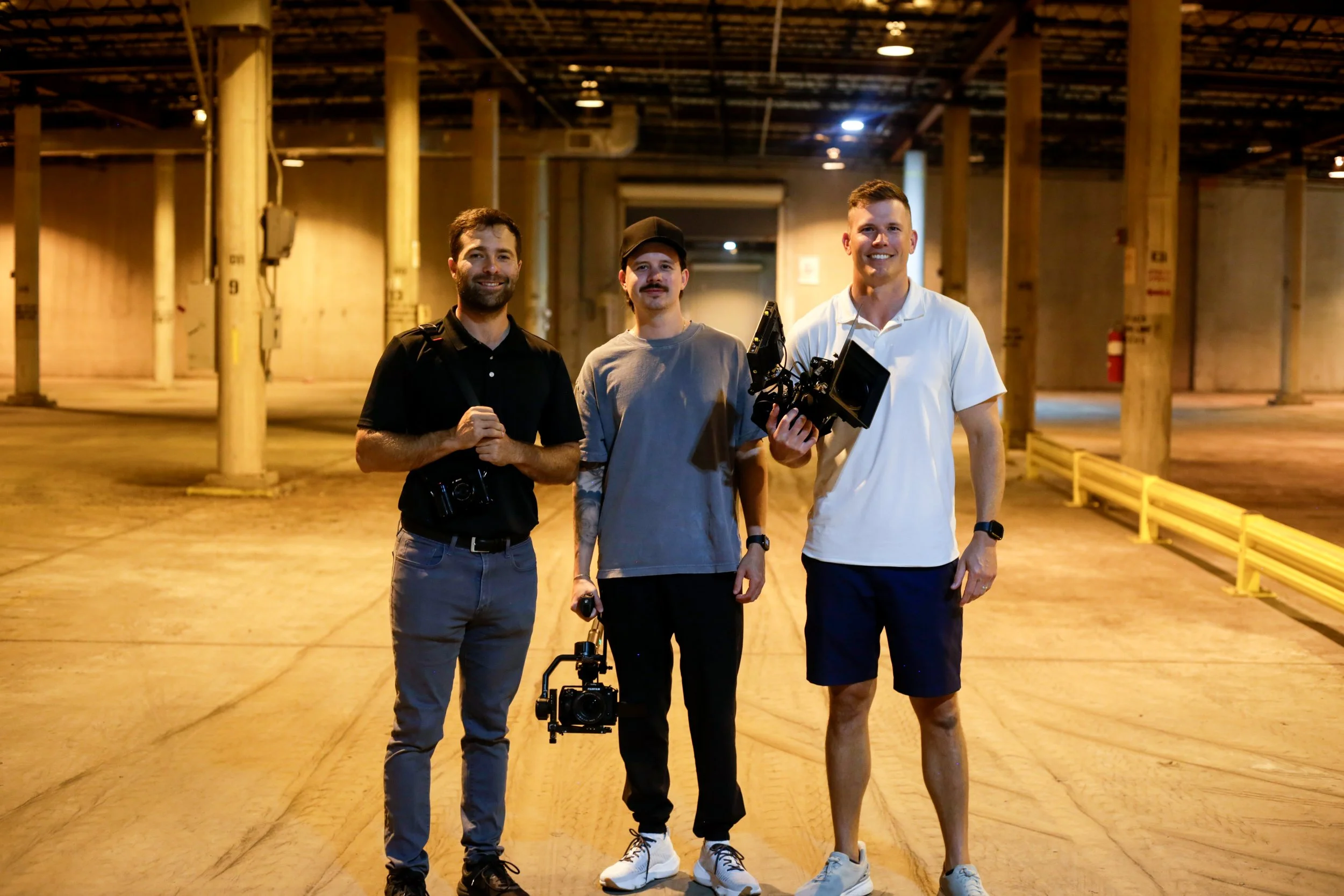
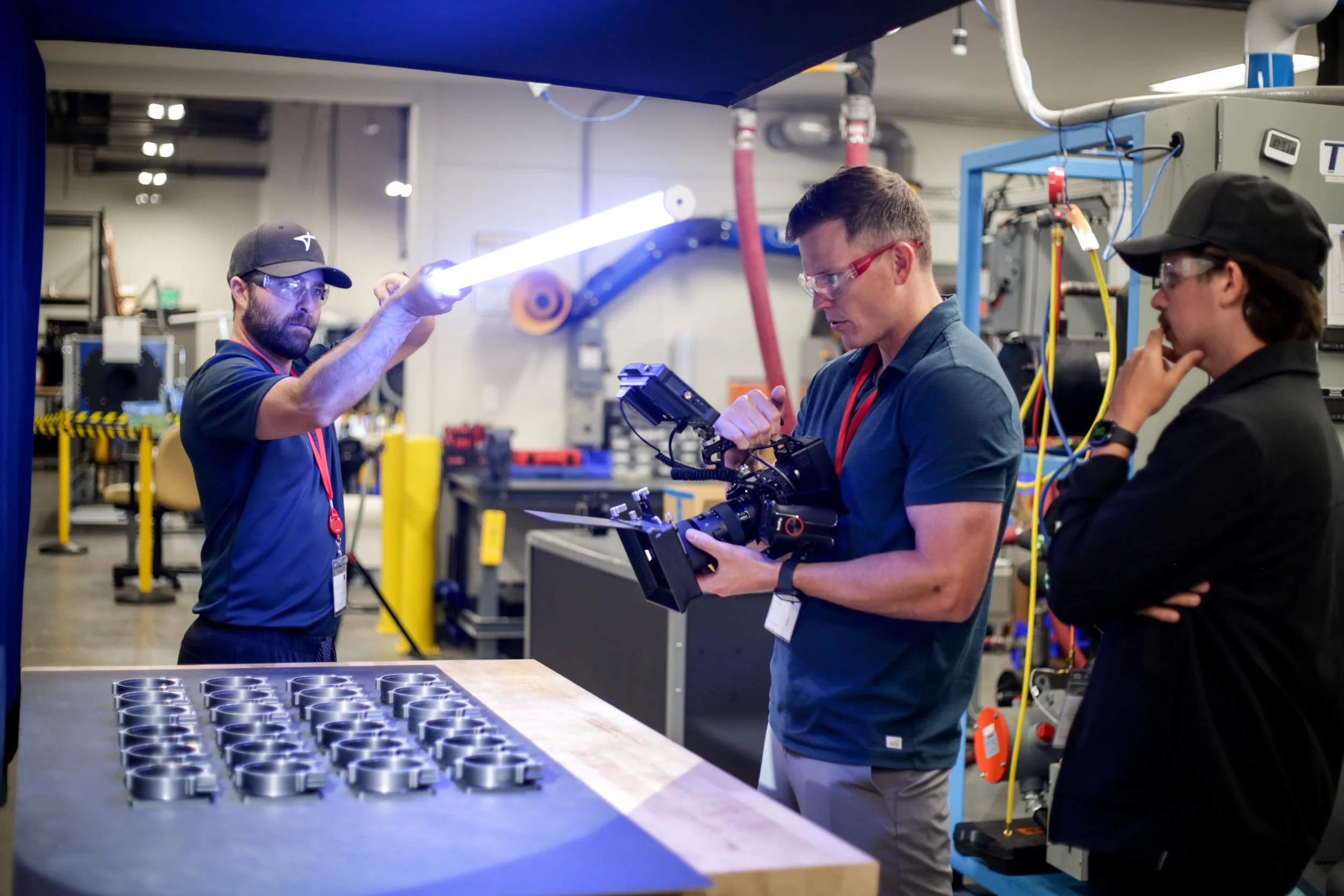
The old warehouse section was dark in the way that industrial spaces often are — not a lighting problem so much as an opportunity to make something look different from what most industrial video looks like. We adapted the shot list when we got there and found environments we hadn't fully anticipated, which is standard on any industrial production where you're working around an active operation.
What the facility gave us was visual variety. The calibration labs look different from the warehouse floor. The warehouse floor looks different from the equipment bays. That visual range makes the finished video more interesting to watch and gives the edit more material to work with than a single interview room would.
One facility. Multiple environments. A finished brand story that could only have been made by being there in person with a crew that could adapt on the fly.
Bascom Hunter: Shooting in a Building Under Construction
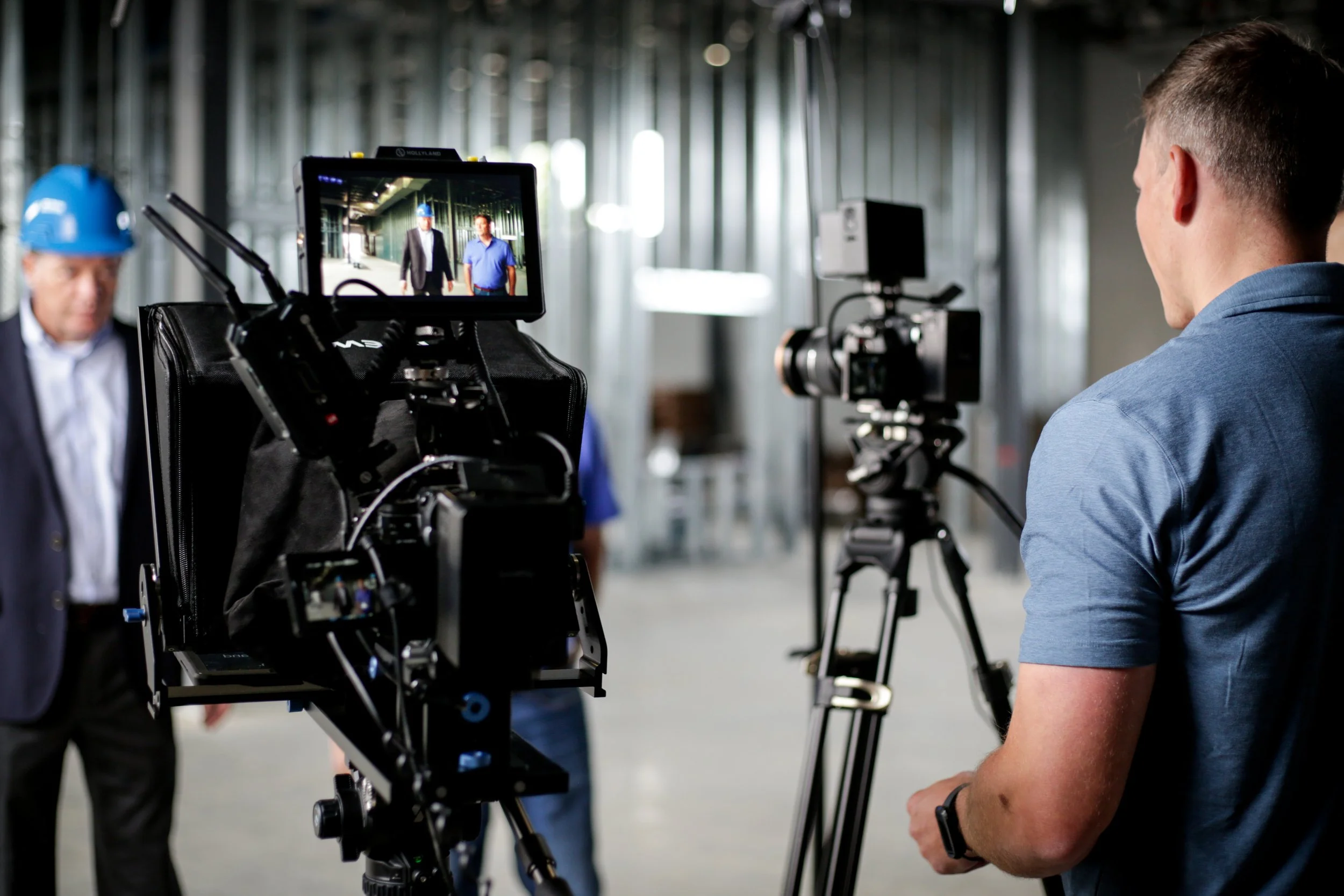
The Bascom Hunter shoot included an interview location in their new building, which was still under construction when we filmed. Studs in the background. Active construction happening around the interview setup.
That's either a problem or an asset depending on how you approach it. We shot it as an asset. A professional services firm being interviewed in front of an unfinished building they're moving into says something about growth and momentum that a finished conference room never could.
It also produced something visually distinctive that stands out from every other professional services brand story that was shot in a clean office environment.
What This Means for How Construction and Industrial Companies Should Think About a Shoot
The companies that get the most from a production day are the ones that plan for it. Not just the primary deliverable, the flagship video everyone agrees they need, but everything else the day can produce.
The interview subjects you're already bringing on camera. The facility or job site environments you're already going to. The b-roll you're already capturing. The drone footage you're already flying. All of it can produce assets beyond the main video if you plan the day with that in mind.
A 60-second social cut from the brand story interview. A project-specific highlight from the job site footage. A recruiting cut that uses the facility b-roll and a different interview question. Branded bumpers that create visual consistency across every video you publish for years.
None of that requires a separate shoot day. It requires thinking through the deployment before the crew arrives, not after the edit is delivered.
That's the difference between a construction or industrial company that gets one video from a production investment and one that gets a content system.
The Most Expensive Video Decision a Construction or Industrial Company Makes
It's not choosing the wrong vendor. It's treating a production day like a transaction rather than an asset.
When a firm spends money on a brand story video and treats it as a one-time purchase, they get one video. When they approach the same shoot with the mindset of a company building a visual asset library, capturing everything the day has to offer and planning for how each piece gets used — they get something that works across their website, their proposals, their LinkedIn, their recruiting, and their trade show presence for years.
The shoot cost is the same either way. What changes is the return.
If your construction or industrial company is ready to approach video as an asset rather than an expense, let's talk about what a production day can actually produce for your business.