Why Most Event Recap Videos Don't Work and What We Did Differently for the Kelly Gibson Foundation
Most event recap videos follow the same formula. Registration. Golf. Awards. Thank you speech. Credits.
They document what happened. They don't make anyone want to be there next year.
That's the difference between an event recap and an event film. And it's exactly the distinction we were thinking about when we went into production on the highlight film for the Kelly Gibson Foundation's Mackel Tournament Weekend.
What the Mackel Tournament Actually Is
Before we talk about the video, it's worth understanding what we were walking into.
The Mackel Tournament is not a charity golf outing in the way most people picture one. This is a full weekend production. A DJ. Live scoring and leaderboards. Vendors. Sponsors with branded activations. Celebrity participants. A Friday Celebrity Scramble followed by a full Metro Championship across Saturday and Sunday. Crowds. Volunteers. First responders. Community leaders.
The scale of it caught me off guard in the best way. This is a professionally produced event that happens to raise money for scholarships. The Kelly Gibson Foundation team and the Mackel family have built something that looks and feels like a premier regional event — because that's exactly what it has become.
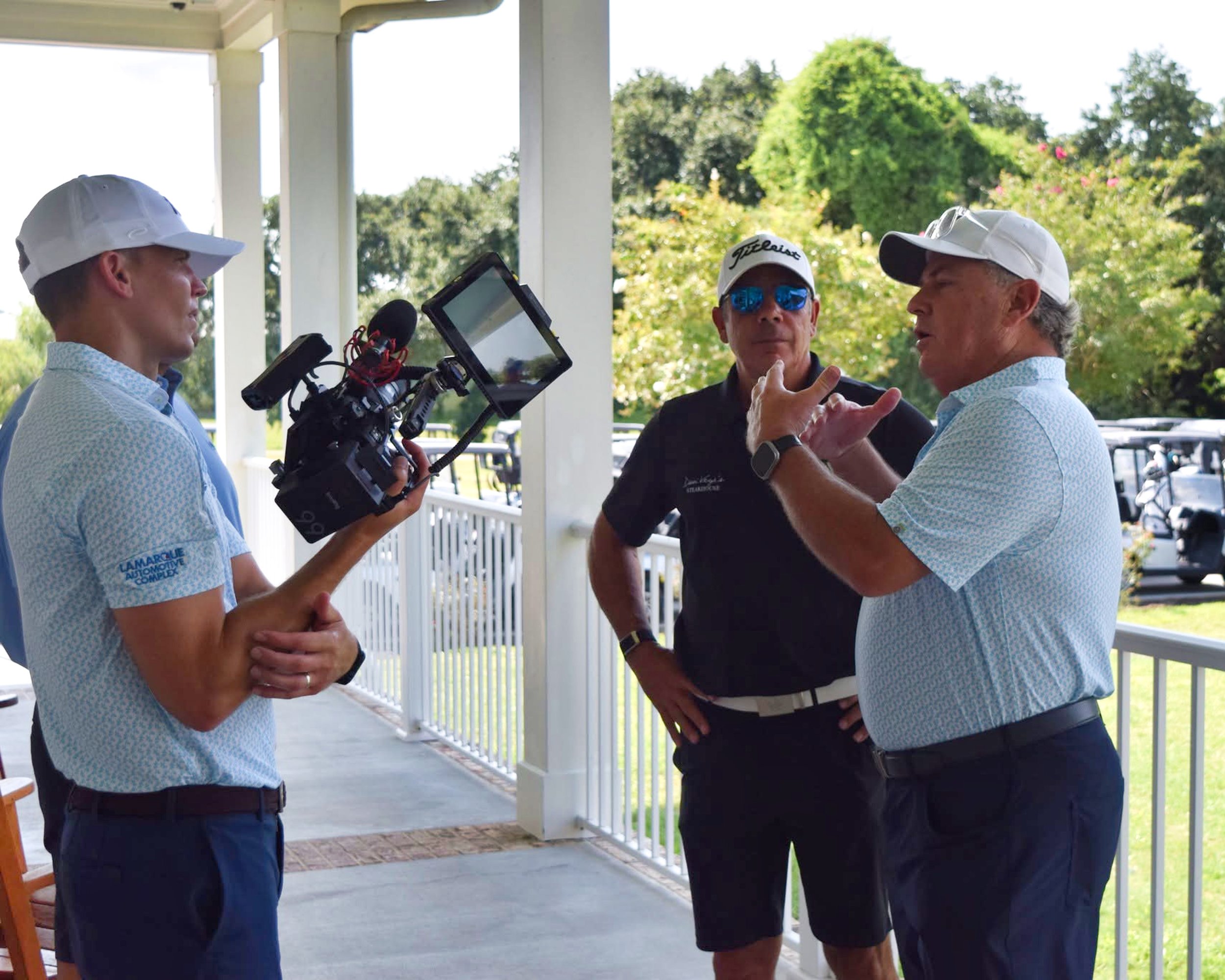
The passion behind it matched the production. Everyone we interviewed, from Kelly Gibson herself to the Mackel family, talked about the tournament the way founders talk about something they've built over years of work. There was pride in it. Real investment in the mission. That kind of energy doesn't show up in a chronological recap. It has to be drawn out intentionally.
The Problem With Chronological Event Videos
Most organizations approach event video the same way they'd approach a news report. Start at the beginning. Cover what happened. End when it's over.
The problem with that approach is that it serves the people who were already there. It reminds them of what they experienced. It doesn't do much for the person who wasn't there and needs a reason to care.
When an organization is trying to grow an annual event — attract larger sponsors, bring in new golfers, expand community partnerships — the video has one job. Make the right person watch it and think: I want to be part of this next year.
That requires a completely different structure than a chronological recap.
How We Approached the Mackel Tournament Film
After reviewing the footage and interviews, the clearest thing was that the strongest story wasn't two separate events — the Celebrity Scramble on Friday and the Metro Championship across the weekend. It was one complete Mackel Tournament experience, with each portion serving a different role in the same narrative.
We structured the film in five movements.
The film opens with energy and scale. Drone footage, registration, celebrity arrivals, crowds, golf action, sponsors. No explanation yet. Just visual proof that this event is bigger than most people expect. The viewer's first reaction should be genuine surprise at the scale.
Then the purpose comes in. Kelly Gibson, Taylor Capouch, Travers Mackel speaking about the foundation and its scholarship mission. This is where the emotion lives. Not in the golf, in the why behind it. Who benefits. Why the community keeps showing up. Why the Mackel family has partnered their family name with this mission.
From there the film expands to community. Sponsors, volunteers, celebrities, first responders, community leaders. The tournament isn't just a golf event. It's a gathering point for the Greater New Orleans area.
The Metro Championship footage reinforces prestige. Dramatic golf moments, the trophy presentation, the champion. This section doesn't interrupt the emotional narrative — it elevates it. The Mackel Tournament is both a charitable mission and one of the area's premier amateur golf championships. Both things are true and both belong in the film.
The film closes with the idea that this is only the beginning. Championship celebration. Smiles. Handshakes. Foundation branding. The final message isn't look what we did — it's we'd love to have you join us next year.
Why This Structure Matters for Growing an Event
The decision to structure the film this way wasn't aesthetic. It was strategic.
A sponsor evaluating whether to invest at a higher level next year needs to see the professionalism, the community reach, and the mission — not just highlight footage. A golfer who heard about the event from a friend needs to feel the energy before they'll commit to registering. A community partner considering involvement needs to understand who's behind it and why it matters.
A chronological recap doesn't accomplish any of that. A well-structured film does.
Every organization running an annual event faces the same challenge. The event itself is the product. The video is what sells next year's version of it. That framing changes everything about how you approach production — from the interview questions you ask to the way you structure the final edit.
What This Means for Your Organization
If you run an annual event, a charity tournament, a fundraiser, a community gala, an industry conference the question worth asking isn't how do we document this. It's what do we want someone who wasn't there to feel after they watch it.
That question has a different answer for every organization. But it's always the right place to start.
We produce event highlight films for foundations, nonprofits, and organizations across Louisiana and the Gulf South. If you have an annual event that deserves a film built to grow it, let's talk.